Episode Transcript
[00:00:00] When I ask who owns your pricing, the answer is typically something like, nobody really owns it. The truth is you probably know that there's some areas that you can charge differently. I don't think it's a one size fits all for every business. Pricing is a team sport, but you need a strong captain.
[00:00:18] I'm Marcos Rivera and this is Street Pricing, where I talk to leaders who are making decisions that shape their growth, their margins, and how they make money. In today's episode, I want to talk about why nobody owns pricing. It's not really their fault. There's a big structural problem, problem when it comes to owning pricing in businesses today, especially in tech companies, B2B companies, SaaS companies, AI, things like that. I'm going to break this down and give you just an easy way to think about how to own pricing, whether you're at early stage, mid stage, or upper growth scaling stage. So that way it doesn't fall behind your product, it doesn't fall behind your business, and you're able to keep capturing value as things are changing. I've been doing this for a long time. Over two decades, I've been working with companies. Over 500 pricing projects. I've recovered over $4 billion of enterprise value. And I ran Pric, one of the biggest private equity firms, and technology Vista Equity Partners. I wrote their playbook on pricing. And I work with 25 of the top private equity technology investors in the world. And here's a common thing that I find in a lot of them when I ask who owns your pricing in any software company, and I don't care if they're early stage, mid stage, or large, the answer is typically something like, well, a team owns it, somebody I think owns it, nobody really owns it, or kind of falls between different roles. And that's a very natural phenomenon, right? When you think about the anatomy of, of a software company and how they grow and what different functions are doing, right? You got the basic building blocks of any company. You got to plan stuff, right? What's your vision, your objectives, what's your business plan, what are you trying to do? You got to build stuff, right? You actually have to have some kind of software services to sell. And then you have to tell folks about it, make them aware of it, make them know what the benefits are, things like that. And then you have to sell it, meaning, you know, get money and close sales all over, running the business, right? And these are kind of things like hiring people, HR ops, all that kind of stuff, right? There really is no dedicated component to exchanging Value value management. Some people call it value engineering, but I'm just going to call it pricing and packaging monetization. So let me break down what's really happening here, right? Is you plan stuff, you build stuff, you tell people about it, you sell it, and then you run your business.
[00:02:27] Where pricing and packaging really sit is actually in between all this stuff, right? If you think about it, right, understanding how your plan gives you differentiated value that you can charge for, how you build defines the value for your customers, who you tell. Value perception. That's a major part of how much people are willing to pay. How you sell and negotiate, another big part of how people pay and how much you're able to exchange value for. And then you have the running the business on the bottom, which is how much scale you can produce. That's the basic formula of any business that's out there. Okay? So all these things are constantly moving and it makes it really hard for any leader, for any company to sit down and say, all right, is our pricing model right? Is our pricing strategy the right one? How are we exchanging value? Are we leaving money on the table? And the funny thing is that there's a lot of signals that are telling you you're leaving money on the table. I'll save those signals for another episode. But the truth is, you probably know that there's some areas that you can charge differently. Maybe there's friction in the sales process, maybe you're seeing some churn in some areas and maybe folks are just flat out telling you you're too cheap. Those are pretty direct signals that your pricing and packaging is off. But how do you own this so that way it doesn't fall behind? How do you keep pricing continuous and running with the business instead of falling behind it? So I have a very simple framework and it really has a lot to do with not just how much money you have or how many people you have, but. But there are stage related ways to own pricing. Because I don't think it's a one size fits all for every business. I think it depends on whether you're early stages or late stages because that's how mature your value story really is. All right, and that's really what's happening here is sort of the maturity of the value story. Real quick, I want to tell you about something my team has been building. It's called Curve. So many of the companies we work with run into the same problem. Their pricing, losing spreadsheets, old decks, email threads. Nobody actually owns it. So it doesn't change when it Should. And when it finally does, it's a guess. Curve fixes that. It connects straight to your live sales data and shows you the actual impact of a pricing change before you make it. Every decision log and easy to explain beta is open right now. If you want in, go to pricingio.com curve that's pricingio.com curv. All right, let's get back to it. So let me break this down in very simple terms. Think about these four S's when it comes to assigning leadership or ownership of your pricing, pricing and packaging model, right? So the first one is going to be strategy, then it's going to be the software and then it's a segmentation and finally it's the scale. What does all that mean if your strategy is what's evolving the most? Oftentimes that's in the early stage companies. When you are in early stage business, okay, say you are under 10 million seed round, you're still founder led sales or founders involved in a lot of those key decisions. Very hands on. Your strategy is adjusting.
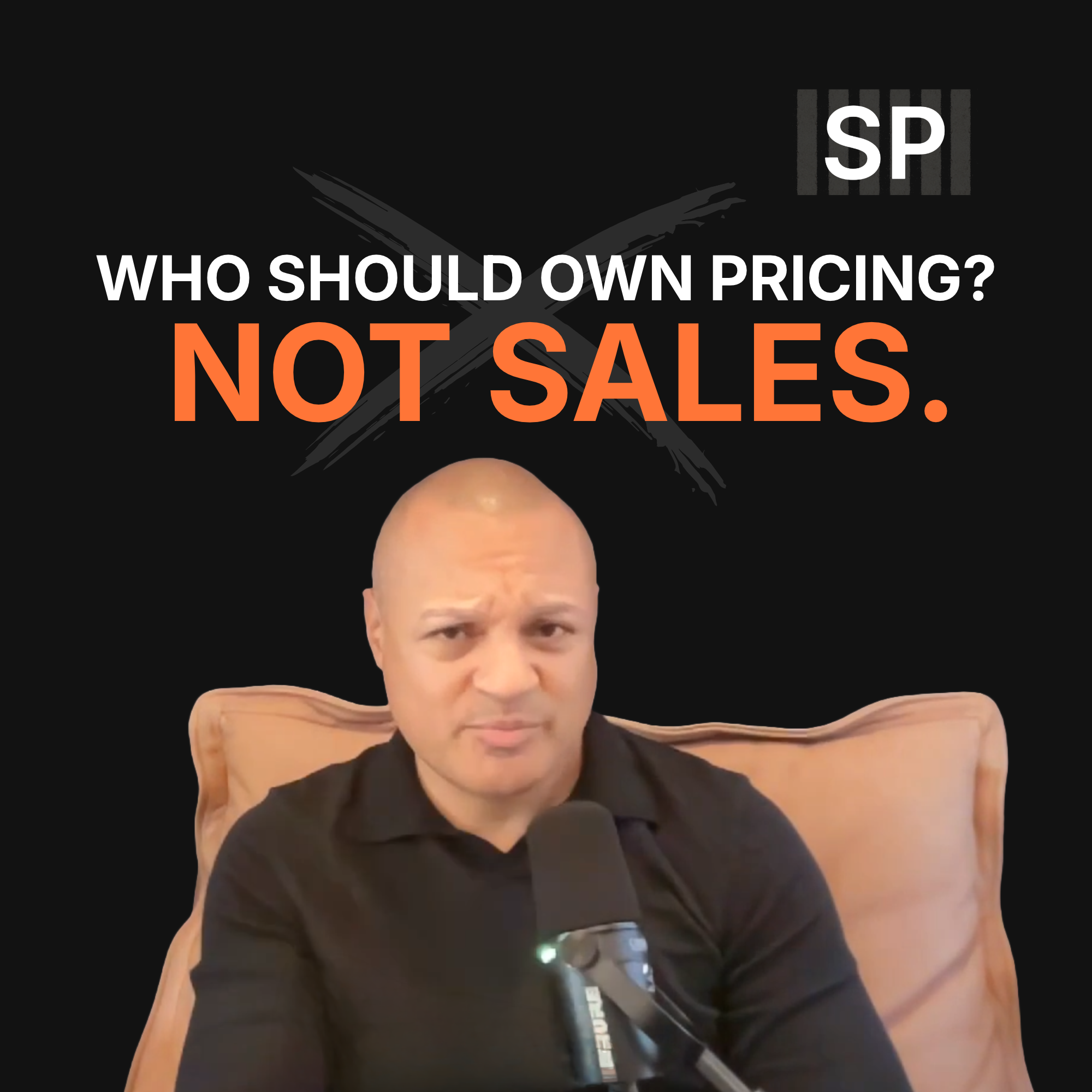
[00:05:17] You're learning a lot pretty rapidly in that situation. The pricing should live with the co founders, with the founders, or with the key individuals making the big strategic decisions. And by the way, nothing too complex here. At this stage of the game, you're probably more of an art than a science when it comes to your pricing and packaging. So the truth of the matter is pick something simple that your customers can read back to you. They can predict their spend and their ROI is at least 10x. All right? If you're an AI company, you probably want to make that ROI 15 to 20x to account for all the uncertainty and variability. Let's go to the next stage. If you're beyond 10 million and say you're in series A, you have some good momentum, you're building up your staff. Now say you're 10 to $50 million in ARR and you're continuing to show progress and you have proof of value. At that stage, you want to move to the build your product is what's influencing the value the most. Think a bit is. Now your strategy was influencing it, now your software is influencing it. Okay, Meaning you're building so much in terms of new use cases, new features, new capabilities, you're solving more jobs to be done and that's what's really leading the charge and influencing your value. At that stage, you want your product team to really own pricing and packaging. They're the closest to the value that's changing. Let them own it. And in that Stage, by the way, make sure that they have the resources they need, they have the skills, they need the data they need to make those decisions. They're not going to make these decisions in a vacuum, of course, but the idea here is that they are going to be the ones that are watching it, tracking it, changing it, evolving it as you continue to scale. If your software is pretty solid and now say you're beyond 50 million and now it's all about your ICP. You're targeting customers, your positioning, the way you, the way you articulate your value. If segmentation is influencing your pricing the most, then you know what, then make sure that your CMO or your marketing team is running with it. They own the messaging, they own the icp, the positioning, they understand the Personas, the pain that they're solving. Let them own the pricing model to make sure that that aligns super well. They also have tons of data in front of them to help make those decisions. Again, you don't want them doing this in a vacuum. Pricing is a team sport, but you need a strong captain. And if the segmentation and pricing perception is what's influencing your value the most, then let's let marketing own pricing. All right? That's from plan to build to tell sell, I would say should never own pricing. You should never have pricing under sales. There's a good distance to build in between. Their job is to close the deal, hit the quota within the parameters, okay? Very straight up and simple. When they don't own pricing, they have the right to be naive and they can sidestep all the pressure to try to discount or do something unnatural. So sell should never have the pricing. Okay? But if you're beyond this in your later stage, your strategy is pretty sound. Your software is pretty well defined, your segmentation is locked in. It's all about scale. Then you want the pricing ownership to be under run. And under run. That usually means revops can own it. That usually means a CFO can own it. But my favorite is actually a dedicated pricing leader to own it. It's somebody who is watching value across all those functions and products and regions and really thinking through how to optimize that value exchange. Having somebody or a small team of two to three people own pricing at the stage of scale always pays for itself and multiple times over and that's it. Just think about what stage you're in in your business, what's influencing and changing value the most, and then use that to decide how to own your pricing. And use my 4S framework as an easy way to think it through. That's it for today. Remember, stop guessing and start growing until next time.